Teaching journalism at this moment
Four professors discuss navigating the real world with their students while teaching the science and art of media
Biased social media algorithms.
AI deep fakes.
Targeted disinformation.
Government pressure on news organizations.
These are pivotal moments.
That’s how media instructor Jason Strother at Montclair State University described the current environment he faces when teaching students.
In interviews with The Word, Strother and three other university instructors described what it’s like teaching at this moment, how they connect to students, and what they hope students take away from their courses.
(Students are) coming up in the midst of all this chaos as it relates to the press,
said Boston University journalism professor Meghan Irons. The freedom of the press, the freedom to cover the Pentagon. Having the president call the press the
enemy of the people, enemy of the state.
They are coming up in this era of total rapid, daily, almost hourly change — not just the president and his rhetoric and Truth Social — but the evolution of social media and how people interact with one another, the evolution of AI, which is reshaping what’s truthful and what’s not truthful, and even reshaping how they think of writing.
About 53 percent of adult U.S. news audiences use social media as their source for news, according to Pew Research, despite the amount of misinformation and generative AI-created deepfakes.
Strother said he polled students in his Disability in Media course this semester on where they get their news. The results revealed the students were largely using social media, though many were doing second-tier checks to make sure what they were seeing was factual.
But some of them were very upfront with the fact that they don’t watch television news,
he reported.
That fits with declining numbers from a recent YouGov poll sponsored by The Economist that found about 40 percent of people ages 18 to 29 say they have very little trust in television news.
Lecturer Nicki Mayo taught a home school co-op during the first Trump administration. She is now a teacher of practice at The George Washington University in Washington, D.C. Mayo is trying to impress on her students a way to cut through the noise of the insults
they hear in the video clips they see on social media.
What was the policy discussed?
she said. Their norm is a scene out of the movie
Idiocracy.
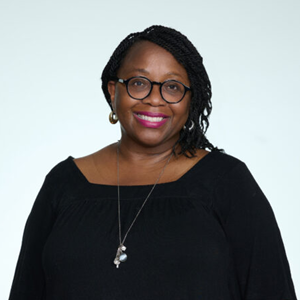
Professor of the practice, impact journalism
College of Communications
Boston University
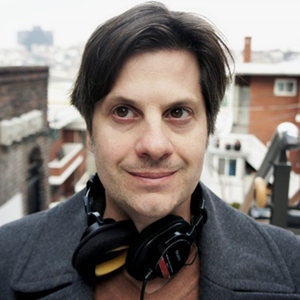
Adjunct instructor
College of Communication and Media
Montclair State University
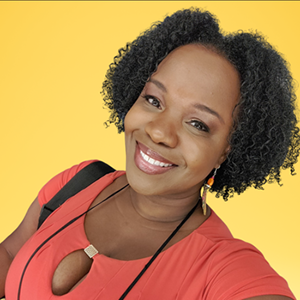
Lecturer
School of Media and Public Affairs at Columbian College of Arts & Sciences
The George Washington University
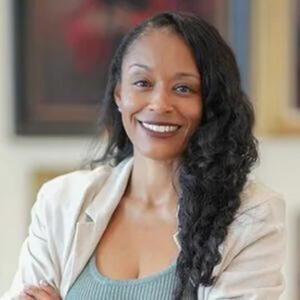
Visiting assistant professor
Morehouse College
Journalism in Sports, Culture, and Social Justice Program
Steady hands in the classroom
When Nicole Carr began teaching at Morehouse College’s Journalism in Sports, Culture and Social Justice program, she brought along her own experiences as a field reporter.
I joined as an adjunct,
she said. At the time, I was still full-time in the newsroom, and covering the parental rights movement, the intersection of right-wing politics, race, democracy, and public education. The advantage to being in the newsroom full-time while you’re teaching is they (the students) get to see the practice and action — and sometimes they’re with you that entire year as you’re going from concept, pre-reporting — and this is, you know, with long-form investigations to publishing.
Such real life experience in the field helped Carr, Irons, Mayo, and Strother all build their course content.
Carr’s work as an investigative reporter included a ProPublica series about the parental rights movement that included people confronting school boards in with shouting, protesting, and occasionally physical altercations. Before that, she won four Emmys for her investigative work at WSB-TV in Atlanta. In 2024, she published an essay in The Emancipator about the history of the Black Press and how it should guide journalism.
Irons spent 20 years as a journalist with the Boston Globe, including work on the Spotlight Team. She also worked at The Providence Journal, Baltimore Sun and the Fort Wayne (Ind.) Journal-Gazette. Her work focused on every day life and culture combined with the impact of politics.
Now she’s passing the baton to her students but incorporating all the lessons that we learned from our own experiences and lack of support or resources that they can benefit from,
Irons said. The idea is for them to do journalism better than we did. And that’s no small thing because I think we do really good journalism. But I would hope that we don’t put them in journalism to do the same old stuff.
Mayo’s career progressed from reporter to producer to manager and editor. She worked at Associated Press Radio and on the AP’s Race and Ethnicity team, at The Philadelphia Tribune, and several NPR affiliates. She helped launch YNN Buffalo (Spectrum Buffalo), E.W. Scripps’ The List and Crofton Patch.
In her classroom, she’s positions herself as managing editor; her students are reporters.
Coming out of my room, you are learning the cleanest way to write and report,
she said. News writing is technical skills, and reporting is kicking them out on the street. The reporting aspect is the ‘why’ and the approach.
Strother, who currently teaches remotely from Seoul, South Korea, founded Lens15 Media, a media platform and consultancy, which tells multimedia disability stories from a disability angle, in 2022. As a current freelance reporter in the U.S. and Asia, he often reports about disability issues. His work is informed by living with low vision.
One thing that I do that I tell my students, I tell them to use journalism as an analytical tool,
he said. I hope they don’t become passive media consumers. I hope that they become better communicators about disability and better accessibility communicators.
Your turn
Does this article leave you with lingering questions? Did this story change your way of thinking? We want to know.
Center in the moment, but know history
Irons is teaching two courses in addition to an in-depth class that pairs students with Boston-area news outlets to do actual reporting: a course on trauma-informed journalism, and a course on race and gender in the media.
I center it in the moment,
she said. We talk a lot about what’s going on nationally, the sort of implications from the White House on the national press corps, their own role as young journalists going into newsrooms, and having agency in some situations to say,
Editor, maybe this isn’t the story for me
or Maybe I can’t do a difficult story because it may be triggering
— but to also understand that the newsroom is intensely competitive so if you remove yourself from a story, chances are you might stay removed. You just have to be real about the real world.
She said she hopes students are better equipped to handle trauma than journalists who went through journalism school in earlier decades.
We never received that training,
Irons said. No one ever told me about self-care. They just told me,
Go cover that fire.
But as Mayo put it, she’s helping students build more skills both in journalism and outside of journalism. Many of her students came of age largely during the first two years of the CoVid-19 pandemic when many schools were online. Some say they likely won’t turn out to be journalists, but she’s hoping they take away lessons.
Life does happen, but life can’t always be happening,
she said. I’m trying to plant seeds. I’m trying to tell them I’m giving you the most foundational skills.
At Morehouse, Carr said she uses history of the Black Press to build a foundation for her students in social justice journalism.
Social justice journalism is in the framework of something I came up with, in that facts are non-negotiable, but framing is a choice,
she continued. And the way that we choose to frame matters of social justice, which intersect with every aspect of our lives, from health care, to education, to housing security, and food security, safety.
Carr said someone once asked her if social justice journalism
meant that she was teaching her students to be activists.
And I had to pause a few years ago, and I actually answered,
she said.Yes, I am teaching them to activate for the truth,
The Black Press, Carr said, has been resilient and has led the way on navigating an ever-changing country. It has pivoted through challenges, but always kept reporting. It’s one of the lessons she brings into her teaching.
Resiliency of the press is something Irons said she sees too.
Someone said this to me when I was coming out of J-school,
she said. Times are tough, jobs were hard to come by,
They said the same thing as today. This is how we’ve always been, we’re a resilient profession, and we bounce back.
Irons said by teaching students to lead with the facts, be grounded in stories from their communities, and to be trusted truth-tellers, they will continue the practice of good journalism.
We are still reporters, writing stories for a specific audience, and we like to say we are in search of the truth,
she said. But we are a business, and our business is journalism. And our business is a resilient business. And that’s what we teach students.
Stacy Kess is the chief of editorial for Equal Access Public Media. She previously worked as an editor and reporter at papers across the U.S. Find her on Bluesky at @stacykess.
This is news. This article uses interviews with people whose experiences, lives, or expertise are relevant to a topic along with facts and research to tell a story about an issue.
Want more of the Word?
Become a Word Patron
Love what you’re reading? Want a to read more? Become a Patron and support The Word for as little as $2.99 a month.