How to write alt text for news
If your image disappeared, how would you describe it?
One of the most frequent questions I hear from journalists is about alt text.
I get emails about what alt text they should add to a their social media posts. I get emails about how they should word the alt text for a photo with an article. I get emails asking me to check the alt text they’re about to publish.
So let’s talk about how to write alt text in a journalism context.
But before we talk about how to write alt text, let’s make sure we understand alt text.
Here’s a picture.
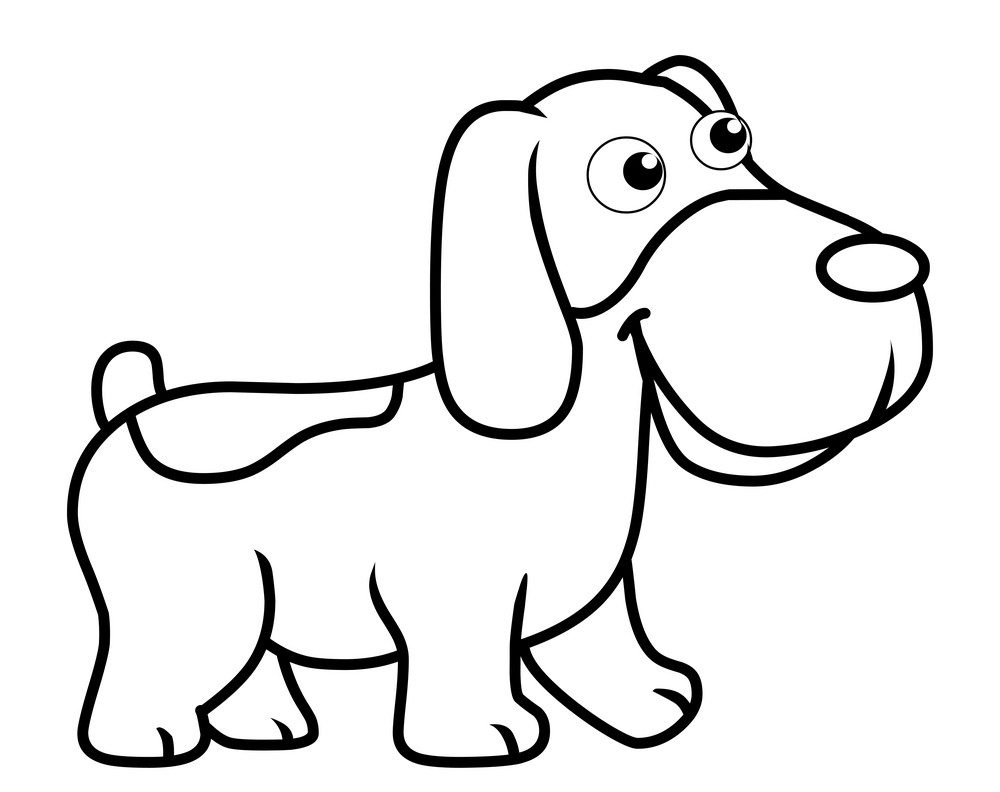
If you are using a screen reader to read this page, you know the alt text on that image said cartoon line-drawn dog.
And we can all agree that’s what it was.
But what if something happened and the picture didn’t paint to screen? Let’s say someone accidentally deleted the image from your server. Or the internet is particularly slow that day and it takes images longer to render on your website. How would you convey what was supposed to be there?
Yes, I purposely left a broken image there, and you can now see the alt text in its place. You all know that what I intended to be there was a cartoon line drawing of a dog because that’s what the alt text says.
When we write alt text, that’s what we’re trying to convey: what the image is. Nothing more, nothing less.
Does this article leave you with lingering questions? Did this story change your way of thinking? We want to know.
Here’s where someone is going to ask me about all the extra context and details. And I’m going to tell you: that’s what image descriptions are for.
And someone is going to ask me, where do I put that image description? And I’m going to tell you, work it into your cutline, use the article, or add it to your social post.
So let’s try it. We’ll use the photo from the EAPM Style and Accessibility guide’s how to write cutlines.
You could go with a couple different options for how to write the alt text:
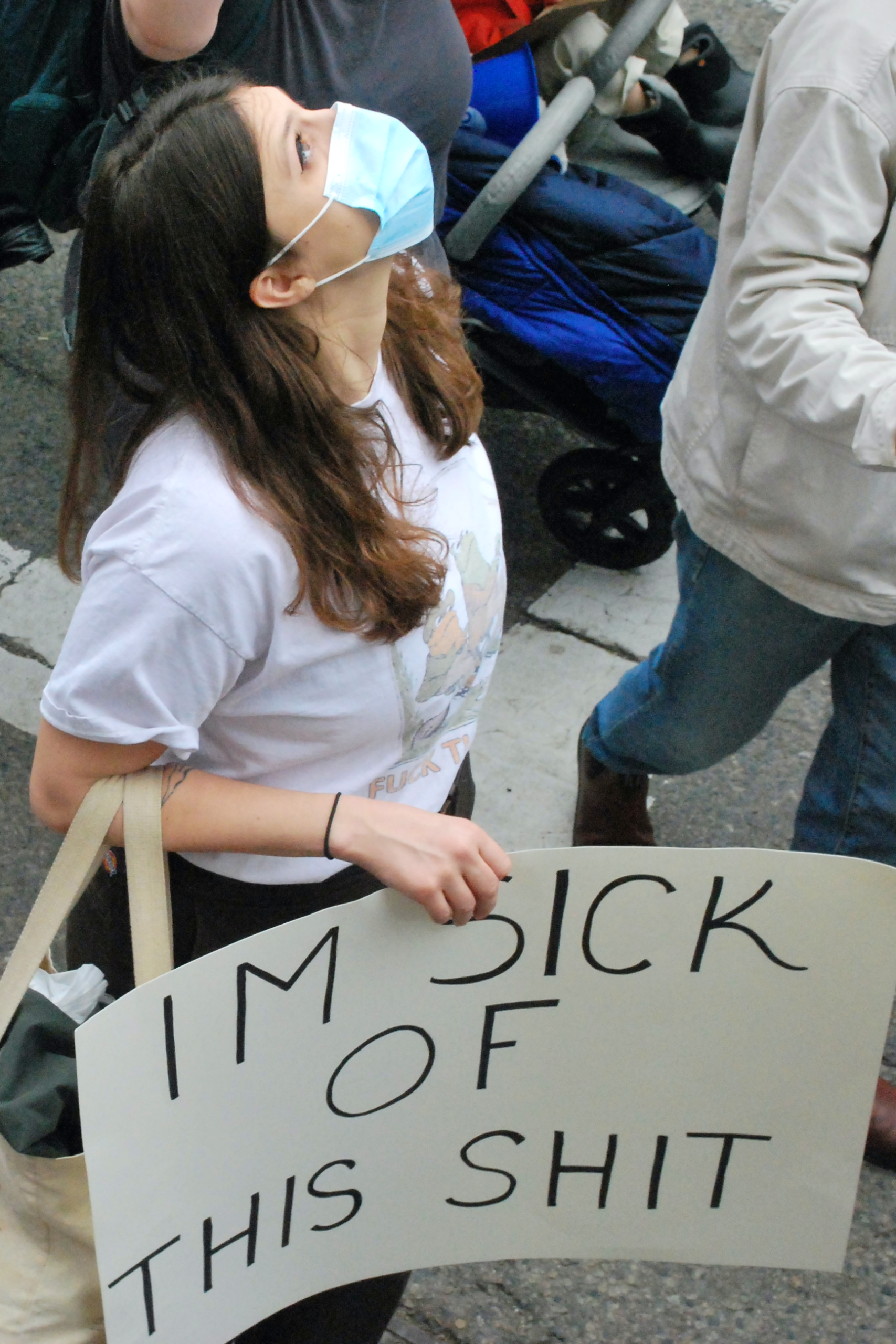
- Woman with protest sign
- Woman with protest sign that reads I’m sick of this shit
Where would you put all the extra context about the protest? Let’s put that in the cutline.
The march, which wound its way through Beacon Hill and to Government Center, attracted more than 100,000 people.
Does this make your cutlines longer than we were taught to make them back when I was in journalism school back when printing presses were invented? Yes.
Am I advising you to write longer, more descriptive cutlines even if it goes against your gut? Yes.
Is a longer cutline a better way to do it than making extremely long alt text? Yes.
Ok, now what if we’re looking at a mugshot? We know below the mugshot we’re going to name the person, so should we repeat the name in the mugshot or describe the image?
You guessed it: describe the image. Let’s use my mugshot as an example.
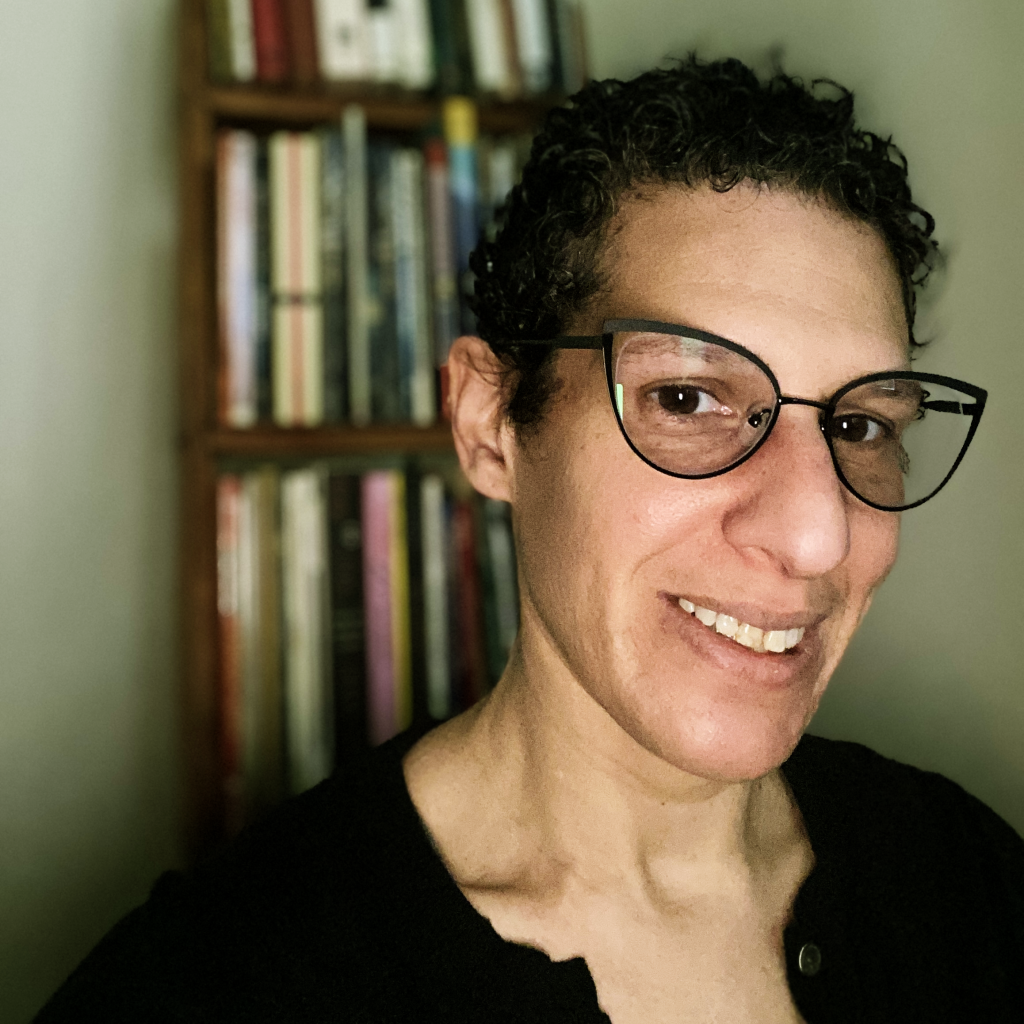
I used the alt text woman with short hair and glasses.
If you are describing me in the context of a story about disability or accessibility, you might choose to write disabled woman with short hair and glasses.
Race, disability, LGBTQ+, religion? These are considered part of an identity, and they only need to be added when identity is important to the image.
So why do we keep the alt text so simple?
- We are only conveying the what the image is.
- There is often a character limit on alt text. For example, WordPress limits alt text to 250 characters.
- This is not an image description.
All that other information can be added in the cutline or in the article or other text on the page to give the context.
So how do we translate this all to social media?
- Keep the alt text simple.
- Use the post space to add the extra context and information.
- Follow best social media practice guides such as Accessible Social.
Still have questions? Yes, I’m here to help — and my inbox still has some space.
Stacy Kess is the chief of editorial and accessibility for Equal Access Public Media. She previously worked as an editor and reporter at papers across the U.S. Find her on Bluesky at @stacykess.
This in an opinion. While this piece contains factual information, it is the author’s point of view.
Imagine your logo here
Or here.
Or here.
As a business sponsor of The Word, your logo could be right here. Want to learn more about sponsoring this or other Equal Access Public Media spaces? Email info@equalaccesspublicmedia.org to get the ball rolling.