
Accessibility overlays create problematic ‘quick-fixes’
Without fixing the foundation, overlays create disruption for some users, but fail to offer legal protection
Newsrooms today are under pressure — from shrinking revenue to shrinking staff. In that environment, anything that promises speed and simplicity is hard to ignore.
Accessibility overlays fit that promise perfectly.
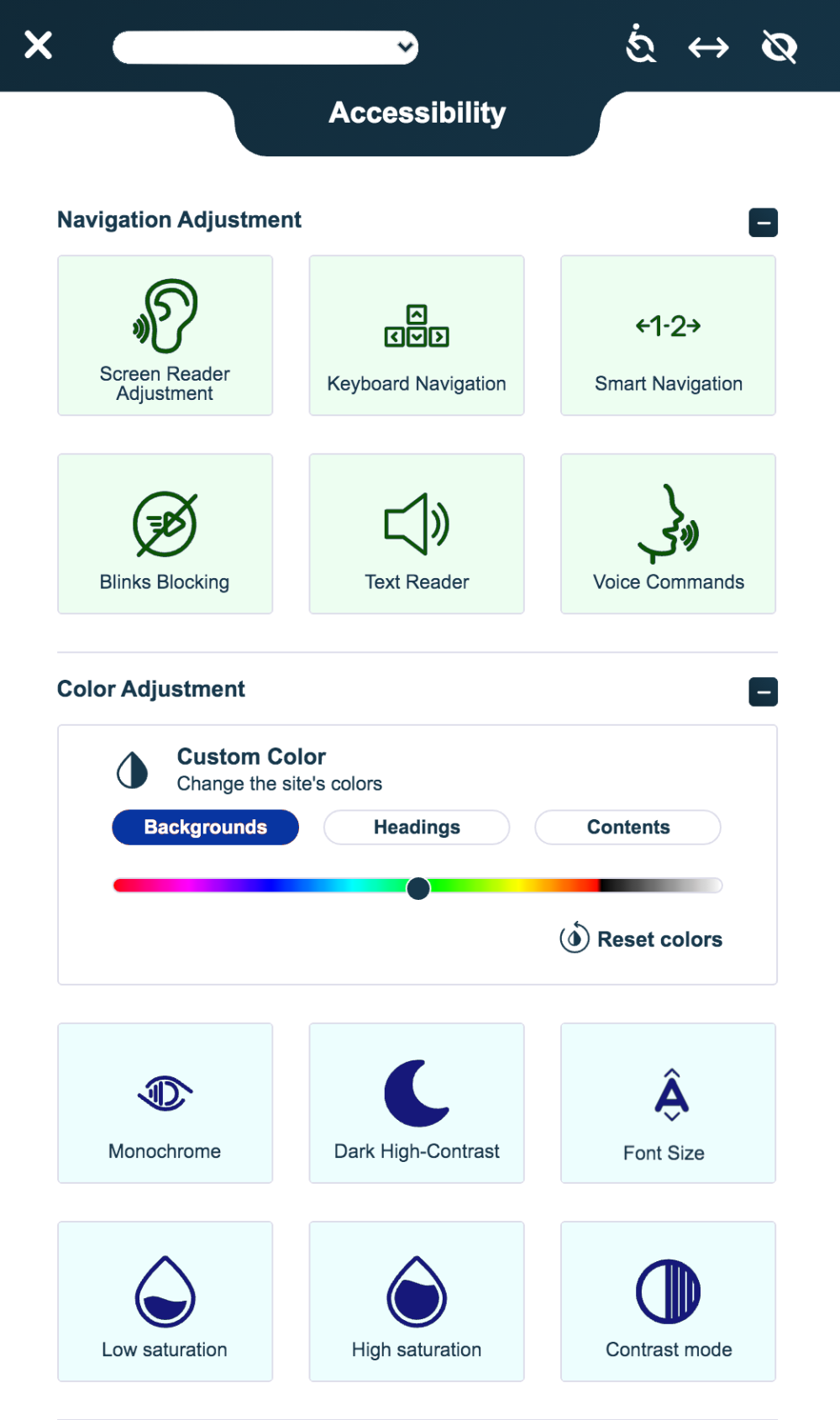
With a single line of code, a website can appear more accessible. Text can be resized. Colors can be adjusted. A toolbar pops up offering “screen reader mode.” For teams stretched thin, it feels like progress.
But accessibility isn’t something you can layer on top of a broken foundation.
Accessibility overlays are not about inclusion despite being sold as solutions to business problems.
They promise fast compliance, lower costs, and reduced legal risk. For newsrooms juggling tight budgets and technical limitations, that pitch lands well. Some tools even claim a site can become compliant within 48 hours.
At the same time, news organizations are chasing engagement. Metrics like clicks, time-on-page, and retention often shape decisions. If a tool promises to keep users on a page longer, especially users who might otherwise leave due to accessibility issues, it becomes attractive.
There’s also the revenue angle. Overlays are used to optimize layout, improve ads visibility, and increase clicks per mille. In a struggling media economy, even small gains matter.
So the appeal is clear: one tool, multiple problems solved.
What overlays actually do
Most accessibility overlays work by injecting JavaScript into a website. The overlay sits on top of existing code rather than changing it.
Common features include:
- Font and color adjustments
- Contrast controls
- Text-to-speech options
- “Accessibility toolbars” for user customization
Some platforms go further, claiming to fix code issues automatically using AI.
Tools like UserWay, accessiBe, AudioEye, and Equally.ai are widely used, especially by small and mid-sized organizations. They are marketed as fast, affordable alternatives to full accessibility audits or redesigns.
But the key detail is this: overlays modify the experience at the surface level. They do not rebuild the structure underneath.
The deeper problem: broken foundations remain
Accessibility is not just about appearance. It is about how a site is built.
If a website has:
- Poor HTML structure
- Missing alt text for images
- Broken keyboard navigation
- Incorrect use of ARIA labels
an overlay cannot fully fix those issues.
It may adjust how content looks, but it cannot reliably correct how that content is interpreted by assistive technologies.
That’s why, despite the rise of overlays, accessibility problems remain widespread. Studies continue to show that a large majority of websites, close to 90% in some scans, still fail basic accessibility standards.
The presence of an overlay does not change that reality.
When help becomes interference
For many users with disabilities, the problem goes beyond “not helpful” to actively disruptive.
Overlays can interfere with screen readers and other assistive tools. Instead of improving navigation, they may:
- Override user’s existing accessibility settings
- Create duplicate or confusing controls
- Introduce lag or errors in reading content
Users who already rely on customized tools or browser settings often find overlays unnecessary — or worse, obstructive.
This creates a contradiction: tools designed to improve accessibility can end up making websites harder to use for the very people they are meant to support.
One of the strongest selling points of overlays is legal protection.
They are marketed as a safeguard against accessibility lawsuits, with some providers offering “compliance guarantees” or even litigation support.
But recent developments suggest otherwise.
Accessibility auditors in Germany have rejected overlays as sufficient for compliance. In the United States, a Delaware court allowed a lawsuit to proceed even though the business had an overlay installed.
These cases highlight a simple truth: compliance is based on actual usability, not the presence of a tool.
Installing an overlay may signal intent, but it does not meet the standard on its own.
For news organizations, this issue goes beyond technical standards.
Journalism is built on access to information, to stories, to public discourse. When a website is not accessible, it excludes part of the audience from that access.
And yet, news platforms are often among the most complex and fast-changing websites:
- Constant updates
- Heavy multimedia content
- Layered navigation structures
These challenges make accessibility harder, but also more important.
Relying on quick fixes in this context risks undermining the very purpose of journalism.
More than 1000 accessibility professionals, advocates say no to overlays
More than 1000 accessibility professional, disability advocates, coders, end-users, and attorneys from around the world have signed the Overlay Fact Sheet, which includes a pledge to:
- advocate against the use of accessibility overlays;
- advocate for website remediation;
- call out deceptive marketing by overlay companies;
- and advocate for removal of accessibility overlays.
What real accessibility requires
There is no single tool that can replace proper accessibility work.
Real progress comes from:
- Clean, semantic HTML
- Clear heading structures
- Descriptive alt text
- Full keyboard navigation
- Regular testing with assistive technologies
- Input from real users with disabilities
It also requires consistency. Accessibility is not a one-time project it is an ongoing process that evolves with the product.
Overlays can play a supporting role, but they cannot carry the responsibility on their own.
The bigger issue: mindset
The rise of overlays reflects a deeper problem.
Accessibility is often treated as a box to tick: something to “add” at the end of a project. In that mindset, speed matters more than substance.
But accessibility is not a feature. It is part of the foundation.
Choosing quick fixes may save time in the short term. But it creates long-term risk, legal, technical, and ethical.
Accessibility cannot be solved with a single script or a floating toolbar. It requires deliberate design, thoughtful coding, and continuous attention.
For newsrooms especially, the stakes are clear.
If journalism is about making information accessible to the public, then accessibility itself cannot be optional, and it cannot be superficial.
Does this article leave you with lingering questions? Did this story change your way of thinking? We want to know.

Akinyele Akintomiwa Michael is a columnist for The Word whose work explores the intersection of technology, accessibility, and storytelling. He focuses on making digital spaces more inclusive while simplifying complex ideas for readers across industries.
This in an opinion. While this piece contains factual information, it is the author’s point of view.
Bring back The Word
The Word is currently suspended due to funding — but you can change that.
Your donations matter. We report on accessibility in the journalism industry. In fact, The Word is the only magazine focused on accessibility in the journalism industry.
Whether you’re a reporter, editor, an accessibility professional, or a member of the public who happens to be interested in journalism or accessibility, we need your help to start publishing again. We don’t hide behind paywalls. We don’t ask you to subscribe. We just ask that you support us.
We’ll keep looking for grants and underwriting, but your donations do matter too.
Help The Word by using the donation box below.