
When awareness isn’t accessible
Endometriosis coverage fails to reach those who most need it
For a condition that affects more than one in ten women and people assigned female at birth, endometriosis remains strangely absent from the places many of us are told to look for understanding.
When it comes to mainstream media, coverage of the disease is indeed present, but not in ways that are consistently useful or accessible.
In recent years, there has been a noticeable rise in the amount of stories written about endometriosis. Headlines now acknowledge delayed diagnoses, chronic pain, and the systemic gaps in care.
And yet, for many people living with the condition, such stories still fail to do the subject justice. They portray endometriosis in an oversimplified light—as solely a menstrual health problem. They contain medical jargon not everyone knows or understands. They redistribute harmful misinformation which has shaped the myriad of failings felt by people living with the disease.
When coverage does exist but fails to meet people where they are, it can deepen confusion, reinforce damaging misconceptions, and overlook the very real trauma tied to women’s healthcare experiences.
I hadn’t heard about it at all in the media
A women’s football writer from the Netherlands, Roos Schelen didn’t encounter endometriosis through journalism or social media. Her diagnosis came by chance, discovered during surgery for ovarian cysts.
I had always experienced a lot of pain during my periods,
she tells me. I thought that was normal… but it wasn’t normal at all.
Like many others, she turned not to newspapers or magazines, but to medical websites and online forums—spaces where lived experience often fills the gaps left by formal reporting.
I don’t think endometriosis has been paid enough attention in the media at all,
she says. It’s mostly been other women sharing their experiences.
This reliance on informal networks is far from unusual. For a condition so complex, under-researched, and frequently misunderstood, people often build their own knowledge ecosystems consisting of patchworks of Reddit threads, support groups, and Google searches.
The problem is not a straightforward lack of coverage. It’s what the existing coverage fails to do.
When information overwhelms instead of informs
Endometriosis is, medically speaking, complicated. Even its definition is often misunderstood. As Roos points out, she had long believed it was simply womb lining growing outside the uterus—a common misconception. In reality, it involves tissue similar to the uterine lining, not identical.
This kind of nuance matters. Why? Because misunderstanding endometriosis at even the most basic level shapes everything that follows: diagnosis, treatment, media coverage, and the way patients understand their own bodies.
When over-simplified, not to mention incorrect, definitions become the default, they can create false expectations about symptoms, progression, or treatment outcomes. Patients may struggle to recognize themselves in the information they are given, particularly if their experiences fall outside the narrow narratives most often repeated in headlines or awareness campaigns.
That lack of clarity can also deepen feelings of confusion and isolation. Many people with endometriosis already spend years trying to have their pain taken seriously. Encountering coverage that is medically vague, overly simplified, or framed around shock-value symptoms can make the condition feel even harder to explain.
For Roos, this gap between public understanding and medical reality reflects a broader issue with how endometriosis is discussed. Awareness has increased dramatically in recent years, but awareness alone is not the same as accessibility. Information can be widespread while still being incomplete, difficult to understand, or disconnected from the realities of living with a chronic illness.
Nuance matters because patients deserve information that treats them as capable of understanding complexity, rather than reducing their experiences into neat, shareable snippets.
But when media coverage presents complex science without clarity or with error, it risks overwhelming the very people it aims to inform.
For newly diagnosed individuals, or those still searching for answers, this can be destabilising. Information becomes something to navigate rather than something to rely on.
And accessibility here isn’t just about simplifying language. It’s about structuring information in ways that are digestible, consistent, and mindful of different cognitive needs, including those of neurodivergent readers.
Without that, awareness can feel more like white noise.
The missing context: trauma, uncertainty, and gaslighting
One of the most striking gaps in endometriosis coverage lies with its emotional landscape.
Articles frequently outline symptoms like pain, infertility, and fatigue. They note systemic issues like delayed diagnosis. But, they rarely dwell on what it feels like to move through a healthcare system that doesn’t quite believe you.
Roos, who describes herself as being neurodivergent, describes being told by doctors that she can’t be in this much pain,
despite living that reality daily. She has seen multiple doctors, none of whom followed her case consistently.
I would have liked to have the same doctor overseeing the whole process,
she says. I don’t feel like I’ve been taken seriously enough.
This is not an isolated experience. For many, the journey to diagnosis spans years, involving dismissal, misdiagnosis, or normalization of severe symptoms. This points towards a wider systemic issue.
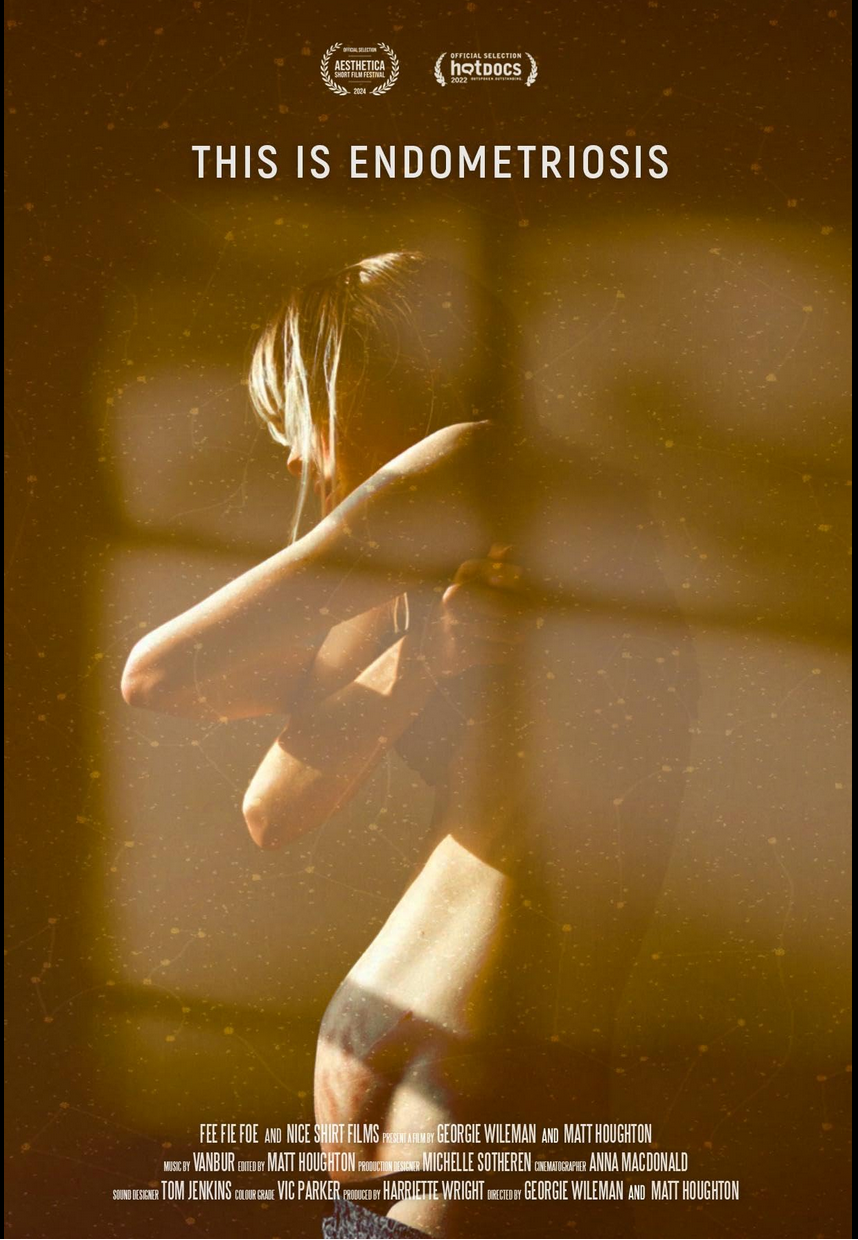
One community working to help people with endometriosis feel seen and informed is the Australian-owned, female-founded Moxie. The organization recently held a private screening of This Is Endometriosis and subsequent panel discussion as part of a community series.
Speaking in Melbourne at the event was Dr Nicola Yuen, OBGYN and Chief Medical Officer at the Royal Women’s Hospital. Dr Yuen reflected that endometriosis care has both come a long way and not far enough
throughout her 25 years in the profession.
One key aspect of endometriosis coverage that needs to change is that news pieces often stop at the point of diagnosis, as if that moment resolves the story. It doesn’t.
For some, diagnosis brings relief. For others, it introduces new uncertainties: treatment options, surgical decisions, fertility concerns, chronic pain management. For many, it is both.
Failing to reflect this complexity flattens the experience and invalidates the trauma embedded within it.
A narrow lens on who is represented
There is another layer to this problem: whose stories are being told.
I think the media should delve into experiences of people of color, the queer community,
Roos says, pointing out that diversity is vastly lacking in the portrayal of endometriosis in the media. Let them speak about their experiences.
Endometriosis coverage often centers a specific archetype. This is typically white, cisgender, heterosexual women, frequently framed through the lens of fertility and motherhood.
That narrative is valid. But it is miles away from being universal.
I don’t want to have children,
Roos tells me honestly. So in that sense, I can be at peace with it more than someone who does.
Her experience highlights how reproductive framing can exclude those whose priorities differ. It also sidelines broader conversations about pain, identity, and quality of life.
Beyond that, people of color, LGBTQ+ individuals, and neurodivergent people often face additional barriers, both in healthcare and in recognition.
Inequality in endometriosis diagnosis is not accidental. It is patterned. It is structural. And it is racialized,
explains
— a March 2026 report conducted by grassroots charity Cysters and Endometriosis UK, led by endometriosis researcher Sarah Harris.
Representation is not just about visibility. It shapes understanding. When people don’t see themselves reflected in coverage, it can delay recognition, reinforce doubt, and make already difficult conversations harder to initiate.
Education shouldn’t start with a diagnosis
A recurring theme in my conversation with Roos is how early education could change everything.
Neither of us learned about endometriosis in school. Neither of us understood what constituted a normal
period growing up.
I think the most important point is early education,
Roos says. What is a normal period? What is not? When should you go to a doctor?
This absence has consequences. When pain is normalized, symptoms are ignored. When awareness comes late, so does intervention.
The media has a role to play here. Of course, not as a replacement for formal education, but as a bridge. As a space where information is not only available, but contextualized and reinforced.
What better coverage could look like
Improving endometriosis coverage is not about abandoning science for storytelling, or vice versa. It’s about integration.
It means:
- Clarity without condescension: Explaining complex medical information in ways that are accurate but accessible, without overwhelming readers.
- Trauma-aware reporting: Acknowledging the emotional and psychological toll of delayed diagnosis, chronic pain, and medical dismissal.
- Inclusive storytelling: Actively seeking out and platforming diverse experiences across race, sexuality, gender identity, and neurodivergence.
- Practical support: Including signposts to resources, e.g. support groups, helplines, specialist services so readers are not left at the end of an article with nowhere to go.
- Consistency: Avoiding contradictory messaging that can confuse or alienate readers already navigating uncertainty.
Above all, it means recognizing that endometriosis is not just a medical condition. It is a lived experience which intersects with identity, culture, and systems that don’t always listen.
Beyond awareness
Awareness is often framed as the end goal. But awareness without accessibility is limited. Awareness without nuance can be harmful. Awareness without inclusion leaves people behind.
For endometriosis coverage to truly serve its audience, it needs to move beyond simply naming the condition.
It needs to listen. It needs to reflect. It needs to evolve.
At the same Moxie event, Dr Yuen also noted that anything that is a chronic illness needs a multi-modal response.
While she was speaking specifically about healthcare, the same principle applies to awareness and media coverage. The harsh realities of endometriosis cannot be meaningfully communicated through a single narrative, a celebrity headline, or simplified symptom lists alone.
People need medical clarity, emotional context, diverse representation, practical resources, and space for different lived experiences to coexist.
We don’t merely need a higher volume of coverage. We need coverage that is inclusive, informed, and insightful.
Does this article leave you with lingering questions? Did this story change your way of thinking? We want to know.
Beth McCowen is a freelance journalist who specializes in women’s health and sport. Her work seeks to alter how individual journalists and the media as a whole approach and raise awareness of issues. Follow her on Bluesky at @bethmccowen.bsky.social.
This is analysis. It looks at a situation or trend through facts, figures, public reactions, and expert response.
Help keep The Word free to all
The Word is the only magazine focused on accessibility in the journalism industry.
Our publishing organization, the Organization for Accessible Journalism, made a promise from day one that content like this would always be free and never hidden behind paywalls because information is education for the public.
Whether you’re a reporter, editor, an accessibility professional, or a member of the public who happens to be interested in journalism or accessibility, we need your help to keep publishing.
Help The Word by using the donation box below.