
Adaptive tech changes who gets to work in journalism
Accessibility tools are part of the workflow for disabled journalists
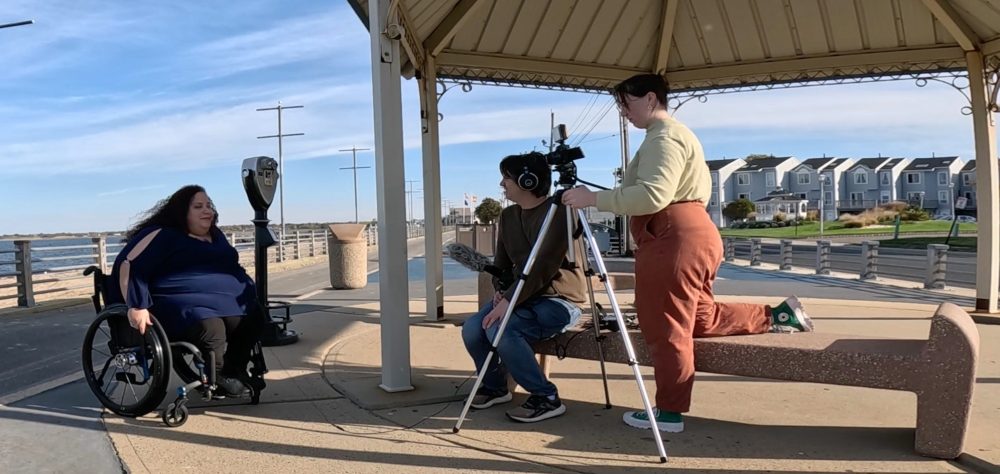
Photo courtesy of Jason Strother
Journalists Jason Strother and Keeley Giblin hold a field interview with Millie Gonzales, board president of the Philadelphia-based Partnership for Inclusive Disaster Strategies, in New Jersey in autumn 2022, where he reported on the long-term impacts of Hurricane Sandy. Strother uses accessibility tools as part of his reporting workflow. Strother often has interview subjects describe the scene around them — an adaption for his own low vision. He has also said it makes great audio.
In 2026, adaptive technology in journalism is no longer something that can be sidelined.
For journalists with disabilities and chronic conditions, these tools can shape how they gather information, conduct interviews, write, edit, and publish. In some cases, they determine who can report, shoot, and stay in the field at all.
For multi-media journalist Jason Strother, the founder of the a disability-focused news platform and consultancy Lens15 Media, built-in accessibility tools changed what daily work made possible.
The accessibility on let’s say Mac devices became so universal by, let’s say 2005, 2006, that it really changed the game to how productive I could be as not just a journalist, but just as an ordinary news consumer, as someone who writes emails, just doing everyday tasks on a computer,
Strother said.
Accessibility starts before publishing
In journalism, accessibility is often treated as a final check before a story goes live, and the focus isn’t on the creator but on whether audiences can access the finished piece. But for disabled journalists, access starts much earlier, with the tools they use to report, write, edit, and publish.
The World Wide Web Consortium (W3C), the respected international standards body behind major web accessibility guidance, reflects this wider view in its Authoring Tool Accessibility Guidelines (ATAG). The guidance says the tools used to create web content should be accessible to disabled authors and should help authors produce accessible content from the start. In a newsroom, that means accessibility begins inside the reporting workflow, not after publication.
For Strother, that applies to tools he relies on every day.
For 20 years now, I have gotten accustomed to using zoom-in functions, text-to-speech, and color inversions. All of these little assistive features that are native to the Mac ecosystem have really enabled me just to do everything digitally, work or not,
he said.
However, these are not separate newsroom tools. They are built into the same devices many journalists already use. Apple lists built-in vision tools such as VoiceOver, spoken text, screen zoom, hover text, and display controls as part of its iOS standard accessibility suite. So in theory, anyone can use them, or at least has access to them.
Workflow is a constant adjustment
Yet access to these tools doesn’t mean that they are used in the same way by everyone. In most situations, journalists adapt them to fit how they work. For example, blind journalists use screen readers, and low-vision reporters rely on zoom capabilities, spoken text, contrast controls, and other built-in settings to handle most of their daily work.
This means that journalists with disabilities or chronic conditions use these tools to handle most of their daily work, with some adjustments. Strother described that process directly: We’re kind of natural scientists in a way. We’re always doing tests, seeing what works, recalibrating, that kind of thing.
Stother himself applied that same approach to his video reporting, using a GoPro and tablet setup.
It’s a lot easier to quality control what I’m framing. And it also allows me to manipulate the menu system on the GoPro through the GoPro app. So I found that to be an unintentionally accessible way to shoot video,
he said.
However, it isn’t the brand that matters here but the control the setup gives. When a tool allows a journalist to bring their story to fruition more easily, through adjustable settings and without relying on another individual to operate the equipment, it empowers the journalist and becomes part of the reporting process.
Pressure inside newsrooms
Despite this empowerment and the greater control adaptive tech is offering journalists with disabilities and chronic health conditions, every barrier to reporting isn’t removed. Even though a journalist may be able to adjust equipment and manage digital tools to work more independently, the pace a modern newsroom demands can still impose exasperating constraints that technology cannot solve.
I think across the board, one thing that people with disabilities need more of is time… I don’t know if I could really keep up with some of the demands of a modern digital newsroom,
Strother said.
His point isn’t about ability but about whether newsroom structures, in many of their current forms, allow for access.
Unfortunately, the reality for many journalists is that newsroom workflows assume speed and constant output, and effective tools cannot fully offset the demands placed on reporters.
Tools shaping future work
Considering the newsroom reality, it appears that the next phase of adaptive technology in journalism may be less about replacing newsroom work and more about reducing the very real friction around it. Current newsroom research points in that direction.
The Reuters Institute for the Study of Journalism found that journalists use artificial intelligence most often for transcription, captioning, translation, and copy editing, while more advanced uses remain limited. The same research highlights a continued focus on video and multi-format publishing as newsrooms adjust their workflows.
So, it can be presumed that as newsroom work becomes more dependent on phones, tablets, video calls, recordings, and multi-format production, smaller assistive interventions become far more relevant. In these cases, control over devices becomes part of whether the work can happen without interruption.
TouchControl, a patented assistive system developed by Mark Bynum that is still awaiting broader adoption, speaks to that need. Bynum created the system after his own experience using touchscreen devices while limited in hand mobility as a quadriplegic.
I would always try to pick up a phone and use the phone, and I would accidentally touch the screen,
he said. So I asked myself why can’t I just disable the touch screen, and that is where the idea came from for this technology.
The idea is simple, but relevant to journalism.
In simple terms, you disable the touch screen without shutting it down. The touch screen stays active, the screen stays on, and the calls continue… it just blocks the touches,
Bynum said.
For journalists working from mobile devices, that could mean fewer accidental interruptions during interviews, recordings, or live reporting.
For journalists, it would allow them to do their job without worrying about accidentally muting their device… they can just focus on the journalism,
Bynum added.
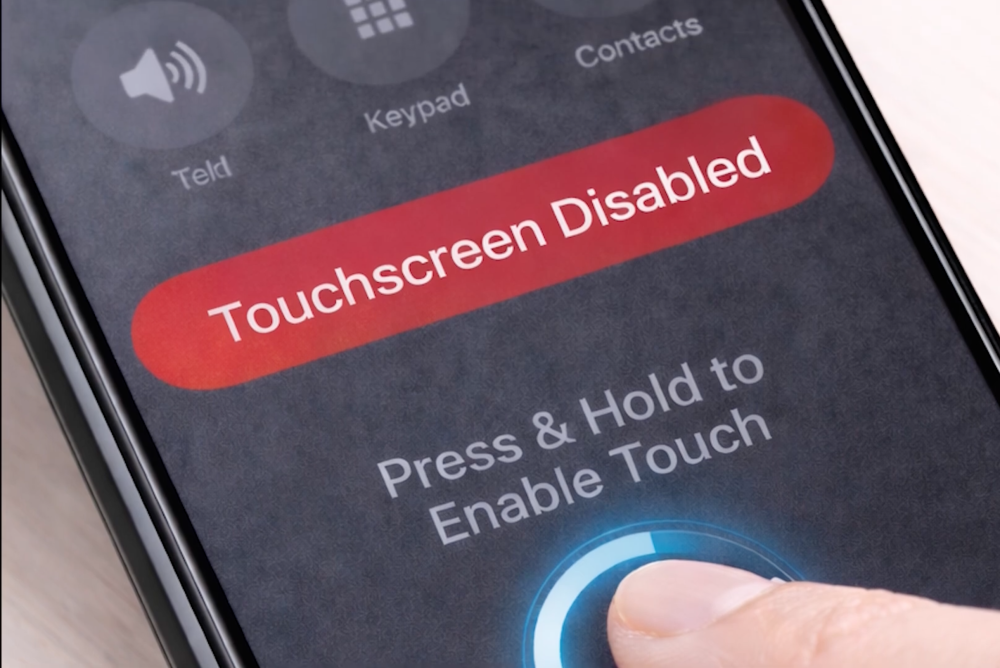
Image courtesy of TouchControl
The TouchControl app allows users to disable the touch screen by pressing and holding the button with their finger, thereby allowing calls to continue without accidental disruption or disconnection.
Rethinking who gets to report
Adaptive technology does not remove the pressure of modern journalism, but it can give more journalists a workable path through it. It allows more journalists to manage the tools, equipment, and platforms the job demands without relying on others to operate them.
This is far more important than it might seem on the surface because it means that the ability to report is no longer tied to a single way of working. More journalists like Strother can stay in the field and do the work on their own terms. The result is a broader range of perspectives shaping the stories that get told.
Does this article leave you with lingering questions? Did this story change your way of thinking? We want to know.

Jason Collins is a freelance journalist covering accessibility and politics. His work looks at how decisions made at the top play out on the ground, and what that means for people navigating them.
This is news. This article uses interviews with people whose experiences, lives, or expertise are relevant to a topic along with facts and research to tell a story about an issue.
Help keep The Word free to all
The Word is the only magazine focused on accessibility in the journalism industry.
Our publishing organization, the Organization for Accessible Journalism, made a promise from day one that content like this would always be free and never hidden behind paywalls because information is education for the public.
Whether you’re a reporter, editor, an accessibility professional, or a member of the public who happens to be interested in journalism or accessibility, we need your help to keep publishing.
Help The Word by using the donation box below.