
Challenging visual assumptions in news
Strategic communication is key to journalists reaching those in the audience with blindness and low vision
Journalists are trained to reach the public. But for many readers with vision loss, the barrier to a story isn’t interest; it’s often access.
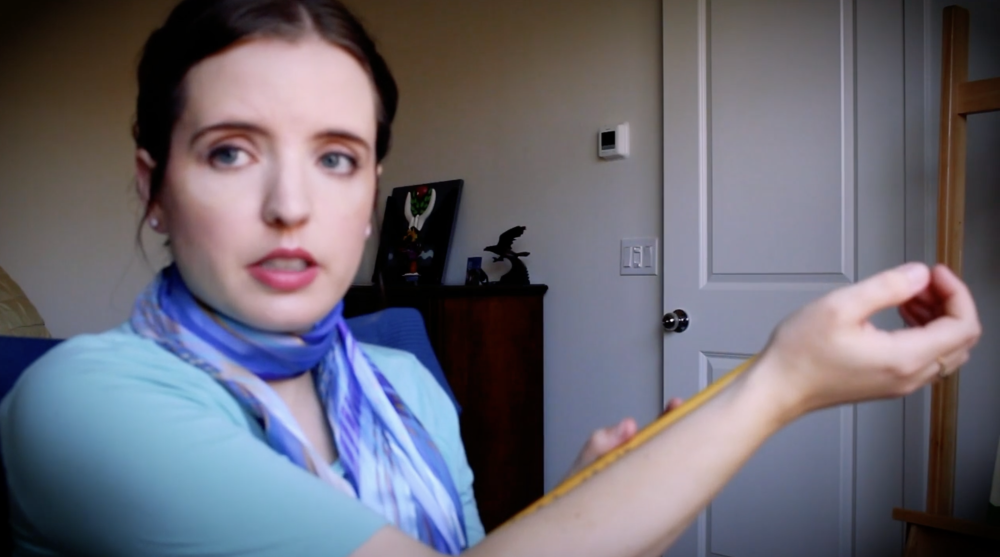
As a writer and educator, my approach to visual assumptions shifted dramatically in March 2020. In 2018, I first began teaching visual art to students with total blindness or partial vision loss. Our in-person classes centered on hands-on experiences, such as tactile demo projects and hand-over-hand practice with artistic techniques.
When COVID hit, our classes went from in-person, multi-sensory experiences to video conferences almost overnight. I felt deep shock and panic; suddenly I had no access to the tactile experiences I had relied on to facilitate students’ learning.
What felt like an insurmountable challenge ultimately became an incredible opportunity for learning and growth. As I began to fumble through translating in-person lessons into material that could work via video conference, I continually sought my students’ feedback with questions.
Is the information landing?
If not, what needs more explanation?
These virtual lessons also revealed the critical importance of written communication. Without an in-person classroom setting that was safe for everyone, both effective spoken and written communication became our primary learning tools.
As we continued adjusting to online learning, a handful of key strategies emerged, including how to structure content for clarity, guide attention with intention, and reduce cognitive load.
These same principles have direct applications in journalism, where readers depend on clear hierarchy, precise language, and navigable structure to make sense of information quickly and independently.
First, journalists and writers must recognize that blindness and low vision occur on a spectrum. For example, individuals with total blindness may or may not have light perception (LP), the ability to detect if light is present or absent, such as sunlight passing through a window.
For individuals with low vision, remaining vision can be located in diverse areas. Examples include the center of the eye, peripheral vision, cloudiness throughout the entire eye, and many other manifestations. A key consideration to keep in mind: there are countless shades of vision loss in between total blindness and low vision.
This broad spectrum also intersects with when a change to vision occurred. For example, a person born sighted who lost vision later in life may have multiple visual memories from which to draw. However, the quality and quantity of this visual information can shift over the lifespan. If vision loss happened many years or decades ago, some visual memory may fade over time or evolve alongside other cognitive changes.
In short, journalists and writers should not assume all people with blindness or low vision have or do not have visual memories. In addition, for individuals with visual memories, it should not be assumed that these memories will remain fixed.
During the pandemic, I exclusively taught online courses to students with vision loss for over two years. As we built our oral and written communication skills, some key accessibility strategies emerged.
Explain analogies fully
Everyday analogies may not always be accessible to a person with vision loss.
Consider this case study.
A journalist covers a story on an expressive dance performance and wants to explain how the dancers moved their arms like windshield wipers. Readers who have been blind since birth cannot draw on a visual memory of windshield wipers, and they may never have had this motion explained to them. This description-as-analogy alone is not fully accessible.
However, if the journalist explains the dancer’s motion as, the dancers bent their arms at the elbows and kept their forearms parallel, then moved their forearms from left to right, this physical description gives readers with congenital blindness a way to imagine the movement.
Ground analogies in concrete, physical descriptions as well, since the specifics of the analogy alone may not be accessible to all readers.
Connect visual information to other senses
Cross-sensory descriptions are invaluable tools for journalists and writers dedicated to improving accessibility. Fabian Hutmacher’s 2019 study Why Is There So Much More Research on Vision Than on Any Other Sensory Modality?
, published in Frontiers in Psychology
, illustrates a hierarchy of the senses; more than 73 percent of people surveyed preferred their vision over all other senses.
This research provides context for why many writers rely on visual cues to explain the majority of sensory information, and in the process, may exclude readers with visual impairments.
Journalists and writers can increase accessibility in their writing by incorporating information related to more senses beyond sight. Another strategy is to partner visual information with additional senses. For example, a piece that centers on colors or nuances in hue can pair colors with sound to better support readers with vision loss.
Consider this example: a journalist reports on a major sports team that recently rebranded from hunter green to emerald uniforms. One way this journalist could illustrate these color choices for readers with vision loss, especially total blindness, is by comparing the colors to sounds. For example: dark hunter green mirrors the deep, rich tones of a bass, while emerald green mirrors the bright, clear sound of a cello in its upper register.
When journalists and writers shift out of vision-first descriptions, this fosters experimentation by crossing imagery with a wide range of aromas, textures, sounds, and flavors.
Natalie Warren, musician, poet, and Certified Braille Transcriber with vision loss, explains: Including sound, taste, smell, temperature, texture, movement, and spatial relationships gives readers alternative ways to experience a scene, especially those who cannot depend on visual information. These details help readers build a fuller mental picture and stay engaged with the story. Writers can also support accessibility by describing space in non‑visual terms and by using clear, well-organized sentences that screen readers can read easily.
Provide orientation cues, when helpful
Depending on an article’s topic, adding orientation cues can be especially helpful for readers with visual impairments.
For example, a journalist covers an art exhibition and describes where each artist’s work is located in a large gallery. For some readers, noting that paintings are in the west hallway and sculptures are by the south entrance may not be descriptive enough.
In contrast, if a journalist explains navigation cues as if giving a live tour, this can be clearer for readers with vision loss. Moreover, the journalist can include other sensory cues, if they are available in the environment. For example, You enter the art museum’s main entrance, which opens into a small sculpture gallery. You’ll hear the water fountain, located in the center of the entrance. Proceed straight ahead, and you’ll enter a room with tactile paintings…
Follow best practices for alt text
A key component of accessible journalism for individuals who are blind or visually impaired is ensuring that all images include alt text (alternative text). In digital publishing, this is often a built-in feature of website platforms. In some cases, on both websites and social media, alt text may be generated automatically using AI. However, in practice, AI-generated alt text can be vague or overly brief, and may not fully or accurately describe an image.
When alt text is properly embedded, screen readers can typically access and convey this information. However, accessibility should not be limited to screen reader users. Individuals with low vision who do not use screen readers may still benefit from having descriptive text available on the page to clarify what an image depicts.
According to Princeton University Press’s alt text guidelines, journalists and writers can improve accessibility by following these alt text best practices:
- Keep alt text concise (generally 140 words or less).
- Accurately describe the image, focusing on the most relevant details in relation to the article.
- If an image is purely decorative, label it as such so readers know it is not essential to understanding the content.
This also applies to the growing use of charts, graphs, infographics, and other visual media in journalism. When these elements convey essential information, that information should also be clearly communicated in text.
Keep sentences and paragraphs concise
Another important consideration for accessible journalism is organizing content into shorter, more manageable sections. This includes using shorter sentences and paragraphs, as well as clear headings to structure the text.
This recommendation should not be misunderstood as suggesting that individuals with vision loss cannot engage with complex ideas or sophisticated writing. Rather, it reflects the practical realities of how many people access text using assistive technologies.
For example, individuals using devices such as closed-circuit television magnifiers (CCTVs) view text at a significantly enlarged size, often reading only a few words at a time. This can make navigating long, dense passages more difficult and time-consuming. Additionally, many forms of vision loss can lead to increased visual fatigue over extended reading periods.
Dr. Carol Basile, author, educator, and school psychologist with low vision, explains: I prefer when an article has some white space…white space between paragraphs allows a slight rest for my eyes. This enables me to continue reading longer articles. (Also), flashing advertisements, page colors, color/shade contrast…can cause visual fatigue and force me to stop reading, even (the) most interesting and informative article.
By breaking content into shorter sentences and paragraphs, writers create both visual and auditory pauses. These natural breaks can make it easier for readers, whether using magnification, screen readers, or other assistive technology tools, to fully engage with the text.
It’s important to recognize that this article is an accessibility starting point —not a comprehensive guide. However, these guidelines underscore what is possible for writers committed to reaching readers with vision loss.
Small, deliberate changes in how stories are structured and described can meaningfully widen access, ensuring that more readers are not only included, but fully able to engage with the work.
Does this article leave you with lingering questions? Did this story change your way of thinking? We want to know.
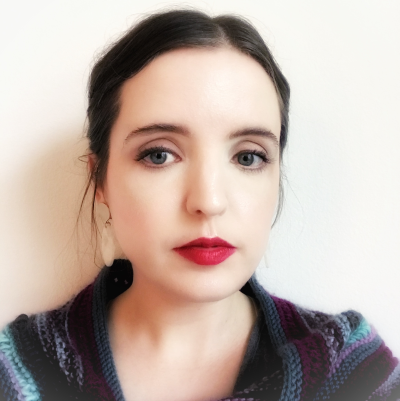
Erin Schalk serves as a writer, artist, voice narrator, and accessibility-centered educator. She is the recent recipient of multiple Writer’s Digest awards and the Armed Services Arts Partnership’s National Scholarship. She has also received a Best of the Net nomination. Schalk’s work has appeared in Wordgathering, Stirring Lit, Parentheses International Literary Journal, The Petigru Review, and numerous other publications. She also received her MFA from the School of the Art Institute of Chicago. For more information, visit erinschalk.com.
This in an opinion. While this piece contains factual information, it is the author’s point of view.
Help keep The Word free to all
The Word is the only magazine focused on accessibility in the journalism industry.
Our publishing organization, the Organization for Accessible Journalism, made a promise from day one that content like this would always be free and never hidden behind paywalls because information is education for the public.
Whether you’re a reporter, editor, an accessibility professional, or a member of the public who happens to be interested in journalism or accessibility, we need your help to keep publishing.
Help The Word by using the donation box below.