
Access may be global but news audiences like me are local
African journalism remains a challenge because of technology, language, and accessibility
Column by
Many years ago, a news article was published that I wanted to read in English.The way it was written was too heavy for me to process.
I grew up with a mix of English, several local languages, and pigdin English. I still use a mix of languages today in Lagos, Nigeria.
Yes, years later I became an English-language writer. I write in simple English because it’s what I understand and what many others understand.
Every day, millions of Africans across the continent wake up and rely on news to understand the world around them.
From political updates and economic changes to health crises and community stories, the media plays a major role in shaping public awareness. But while journalism continues to evolve across the continent, one important question remains: who is still being left out of the conversation?
Accessibility in journalism is often discussed globally, especially during an observance like Global Accessibility Awareness Day (GAAD) which was on May 21. Yet, in many African media spaces, it still receives little attention.
And it pains me to see that most people can’t relate to news articles — because of how it happened to me.
Newsrooms continue to prioritize speed, trends, and digital growth, while accessibility is treated as secondary. The result is simple: many people struggle to fully access, understand, or engage with the news.
The World Health Organization tells us that up to 40 percent of Africans are disabled. A deaf viewer may watch an important televised interview without captions or sign language interpretation. A visually impaired reader may struggle to navigate a poorly designed news website that screen readers cannot properly interpret. These are not small inconveniences. They are real barriers to information.
But accessibility in Africa goes beyond disability alone.
Across the continent, internet affordability remains a major issue. Many digital news platforms are filled with autoplay videos, heavy graphics, and large media files that consume significant amounts of data. Data to load articles on the internet has a strong impact on me, personally.
For readers in low-income communities or areas with unstable network connections, accessing these stories becomes difficult. In some rural communities, even electricity remains inconsistent, making digital journalism harder to rely on.
The digital divide is even harder for disabled African people who need adaptive technology.
Language is another challenge that is often ignored.
Africa is home to thousands of languages, yet much of mainstream journalism is still delivered in colonial languages such as English and French. While these languages may reach urban audiences, they often create distance between journalism and local communities. Information becomes less accessible when people cannot fully understand the language in which it is presented.
Even within English-language journalism, accessibility can still be lacking. Many reports are overloaded with technical terms, political jargon, and complicated explanations that make important stories difficult for ordinary readers to connect with. Journalism should inform people, not confuse them.
There is also the issue of representation. Much of African journalism remains urban-centered. Stories from major cities dominate headlines while rural communities receive less attention unless there is a crisis. Entire populations are sometimes reduced to statistics rather than being included as active participants in national conversations. Accessibility is not only about consuming information; it is also about whose voices are allowed into public discourse.
Despite these challenges, progress is happening gradually.
Some African media organizations are beginning to experiment with more audience-friendly storytelling. Short-form videos with captions, podcasts, simplified explainers, community radio, multilingual reporting, and mobile-first journalism are slowly becoming more common. Independent creators and young journalists are also finding creative ways to make information easier to access online, especially through social media platforms.
Community radio stations across different African countries continue to play a significant role in bridging information gaps, particularly in rural areas where internet access remains limited. In many ways, these traditional forms of journalism have remained more accessible to ordinary people than some modern digital platforms.
Still, there is a long way to go.
Because news in Africa is written in a way that has excluded people with less ability to understand, whether by making in accessible to those with disabilities or by using English, information is not accessible.
Accessibility should not be viewed as an optional feature added after publication. It should be considered part of responsible journalism itself. A story cannot truly serve the public if large groups of people are unable to access it, understand it, or see themselves reflected in it.
As African journalism continues to grow digitally and globally, accessibility must become part of the conversation from the beginning. This means thinking beyond clicks and engagement metrics. It means asking whether journalism is reaching people in ways that are inclusive, affordable, understandable, and human.
Global Accessibility Awareness Day is more than a symbolic observance. It is a reminder that information only becomes powerful when people can genuinely access it.
And perhaps that is the real challenge for journalism in Africa today: not simply producing more stories, but making sure more people are truly able to receive them.
Does this article leave you with lingering questions? Did this story change your way of thinking? We want to know.
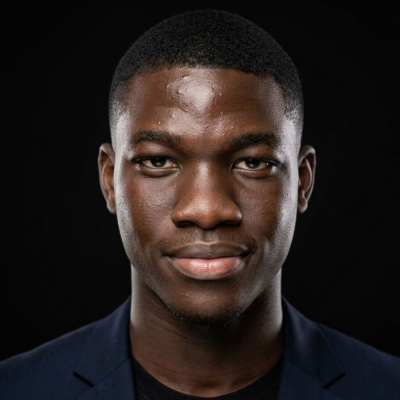
Akinyele Akintomiwa Michael is a columnist for The Word whose work explores the intersection of technology, accessibility, and storytelling. He focuses on making digital spaces more inclusive while simplifying complex ideas for readers across industries.
This in an opinion. While this piece contains factual information, it is the author’s point of view.
Bring back The Word
The Word is currently suspended due to funding — but you can change that.
Your donations matter. We report on accessibility in the journalism industry. In fact, The Word is the only magazine focused on accessibility in the journalism industry.
Whether you’re a reporter, editor, an accessibility professional, or a member of the public who happens to be interested in journalism or accessibility, we need your help to start publishing again. We don’t hide behind paywalls. We don’t ask you to subscribe. We just ask that you support us.
We’ll keep looking for grants and underwriting, but your donations do matter too.
Help The Word by using the donation box below.