
Attention: most people won’t finish your 3,000 word article
Many audiences never read good long-form journalism to the end
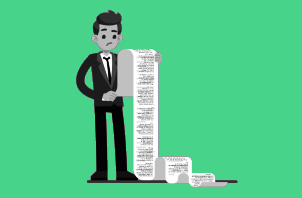
Many well-reported articles are never finished. Not because they are bad. Not because they lack value. But because attention collapses.
An article can be carefully researched and properly written, yet still fail to hold readers to the end. In today’s distracted environment, even strong long-form journalism struggles with engagement.
I’ll use myself as an example. Sometimes, when I see a very long article presented as one heavy block on a page, I skip it. Not because it’s boring. Not because I don’t care. But because it feels overwhelming at first glance.
Before a reader processes your ideas, they react to how the article looks and feels. And if it feels heavy, complicated, or exhausting, they move on.
Structure plays a bigger role than we admit. A piece may contain important insights, but if it is not structured in a reader-friendly way, most people will never reach those insights. Long paragraphs, delayed context, or unclear transitions quietly push readers away. It is not always the quality of the content that loses them but the way the content is presented.
Writers often focus on having strong points, but strong points are not enough. Your voice needs to be present, and your structure needs to guide the reader. A reader should not feel lost halfway through an article. They should feel led.
There is also a difference between getting attention and keeping it.
The battle for attention
Getting attention often happens through punchy headlines or engaging topics. That part is relatively easy. But keeping a reader until the final paragraph requires something deeper — clarity, simplicity, familiarity, and relevance. If the writing feels confusing or unnecessarily complex, readers grow tired. Once confusion sets in, interest fades quickly.
Most writers have heard that you only have a few seconds to capture attention. That pressure is real. But the bigger challenge is sustaining that attention beyond the opening. The transition from introduction to body is where many articles lose their audience. If the energy drops or the focus becomes unclear, readers quietly exit.
The goal is not just to attract clicks. It is to carry readers through the experience of reading.
The challenge becomes even clearer when we look at attention span research.
Several studies suggest that sustained attention drops significantly in digital environments. On screens especially computers and phones readers compete with notifications, tabs, messages, and background noise. Engagement often declines after extended periods of continuous focus. That does not mean people are incapable of depth. It means depth now has competition.
The way we consume video and audio tells a similar story. Podcasts and videos are usually structured with pacing in mind. A 10-minute video feels intentional. A 45-minute podcast prepares you mentally before you press play. But when it comes to text, writers sometimes assume unlimited patience from their readers. We publish long articles without guiding readers through them. The result is predictable: drop-off.
Social media has made this even more complicated. Many platforms train users to scroll quickly, absorb information in seconds, and move on. The brain adapts to that rhythm. Quick shifts become normal. Long, uninterrupted focus begins to feel unusual.
So when a reader opens a detailed 1,500-word article, they are not just reading. They are pushing against habits shaped by the platforms they spend hours on daily.
Does this article leave you with lingering questions? Did this story change your way of thinking? We want to know.
Keeping attention in long-form journalism
Long-form journalism is not dead, but it must be intentional.
Attention is no longer automatic. It is earned and then re-earned throughout the piece.
That starts with structure. Clear sections. Visible breaks. Logical transitions. Strong subheadings. These are not cosmetic decisions. They are attention tools.
It also requires clarity. Readers lose interest when they feel confused. Complexity is sometimes necessary, but confusion is not. If a paragraph forces a reader to reread it just to understand the point, fatigue sets in. And fatigue leads to exit.
There is also the matter of voice.
An article can be informative and still feel distant. When a writer’s voice is present, calm, direct, human, readers feel guided rather than lectured. That subtle difference can determine whether someone finishes the article or abandons it halfway.
Ultimately, the goal is not to shorten everything. It is to respect the reader’s cognitive effort.
Journalism has always asked people to slow down and think. That responsibility has not changed. What has changed is the environment in which that thinking happens.
If we want audiences to finish good articles, we must design them for real reading habits, not ideal ones. We must structure for skimming and depth at the same time. We must move with clarity, not assumption.
Depth still matters. Serious reporting still matters. But attention is no longer guaranteed simply because something is important.
Finishing an article today is not just about interest. It is about design, pacing, clarity, and trust.
And the writers who understand that will not just attract readers, they will keep them.

Akinyele Akintomiwa Michael is a columnist for The Word whose work explores the intersection of technology, accessibility, and storytelling. He focuses on making digital spaces more inclusive while simplifying complex ideas for readers across industries.
This in an opinion. While this piece contains factual information, it is the author’s point of view.