Journalist: Paralympic news still focuses on disability over sports
Sports reporter describes pushing back on inspiration porn in her coverage of 2026 Milano Cortina Winter Games
Every Paralympics, the same stories roll back in.
Scroll for long enough and you’ll find them. The tear-jerking montage. The headline about “bravery”. The profile that tells you exactly how someone became disabled before it tells you what they’ve actually achieved. It’s predictable. Almost formulaic.
And at this point, it’s not lazy journalism; it’s a real problem rooted in ableism, which has become routine.
Disability is not marginal. In the United States, around one in four adults lives with a disability. Globally, more than one billion people are disabled. The way Paralympians are framed on one of the world’s biggest sporting stages doesn’t just shape how we watch the Games, it shapes how we understand disability.
There has, of course, been progress. The Paralympics are more visible than ever. Broadcast hours are up, audiences are growing, and it’s easier than ever to follow events live.
But visibility without understanding isn’t all that’s needed.
Despite all of the growth, the same tired narratives still dominate. Paralympians are framed as either tragic figures who have “overcome” something, or as superhuman anomalies who have somehow transcended their bodies. It sounds positive, but it isn’t.
Sports journalist Laura Howard was in Italy covering the Milano Cortina 2026 Paralympics Winter Games in March for syndicate Beat the Media, and as she puts it, that framing is still baked into how stories get commissioned.
I was told
Howard said.lean on the human interest
, and that didn’t always sit right with me,
In other words: make it emotional. Make it moving. Make it easy. I don’t think that’s good journalism,
Howard put it plainly.
These ideas just repackages the same old tropes which maintain that disability needs explaining, and that it’s a spectacle for us all to watch and acknowledge only when it’s convenient.
Non-disabled athletes are allowed to be good at sport. Disabled athletes, apparently, have to justify their existence in it. Take London 2012’s Meet the Superhumans
advertising campaign, for example, which catalyzed widespread debate about how the media treats disabled athletes. Despite the debate, the advertising campaign was reintroduced for the 2016 and 2020 Paralympic Games.
This is where the obsession with inspiration
starts to fall apart. Paralympians are endlessly described as brave, courageous, uplifting — as if their primary role is to make the audience feel something.
We’re The Superhumanscampaign was released ahead of the 2016 Paralympics, despite debate over a similar 2012
Meet the Superhumanscampaign, which leaned into inspiration porn.
The
Howard explained, superhero
narrative,glamorizes disability and only sees it as valid if you’re competing at that level. It takes disability out of the reality that it is actually disabling for people, and says they have to be these
superheroes
to be worthy of praise.
Elite sport is not a charity exercise. It’s not there to provide life lessons.
There’s more literature now on why that framing is bad, and I didn’t really see stories like that at this Paralympics,
she continued. It’s definitely decreased, but it’s still an easy route and people still go down it.
When coverage leans too heavily on that emotional angle, the sport itself gets sidelined. The training, the tactics, the technical precision (the things that actually define elite performance) are treated as secondary.
Instead, the story all too often starts somewhere else: Injury. Illness. Trauma. The moment everything changed.
The backstories matter, but when they become the default, they stop being context and start being the entire narrative. This detracts from a Paralympian’s role as an elite athlete, and minimizes their role in whatever sport they may be competing in.
It’s known as inspiration porn, a term coined originally by comedian, journalist, and disability activist Stella Young — and specifically called supercrip inspiration porn, in which disabled people are shown as overcoming disability toward a seemingly impossible goal, such as to become an Olympic-level athlete.
Howard is blunt about how uncomfortable that can be as a journalist in practice. I’m not gonna stand in the mix zone and be like,
she said. oh, what happened when you were paralyzed?
That’s so weird. This is not the time or place.
And yet, those are exactly the details journalists are often pushed to include. Because they’re seen as the hook. The part that will land. Even when athletes themselves are over it.
One athlete she worked with had already spoken publicly — multiple times — about how he became disabled. He didn’t want to go through it again. He doesn’t want to speak about it,
Howard says. That story’s already been written.
That should be the end of it. It rarely is, because the industry still defaults to what it thinks audiences want: something emotional, something digestible, something that fits neatly into a narrative we already recognize.
But when every story begins with loss, disability is framed as something that has to be overcome in order for life, and indeed sport, to be meaningful. That framing doesn’t just misrepresent athletes. It reinforces a broader, more damaging idea: that disability is inherently, tragically all-consuming.
It also conveniently avoids talking about the things that actually shape Paralympic sport.
Access. Funding. Equipment. Coaching. Infrastructure.
A Paralympian’s view
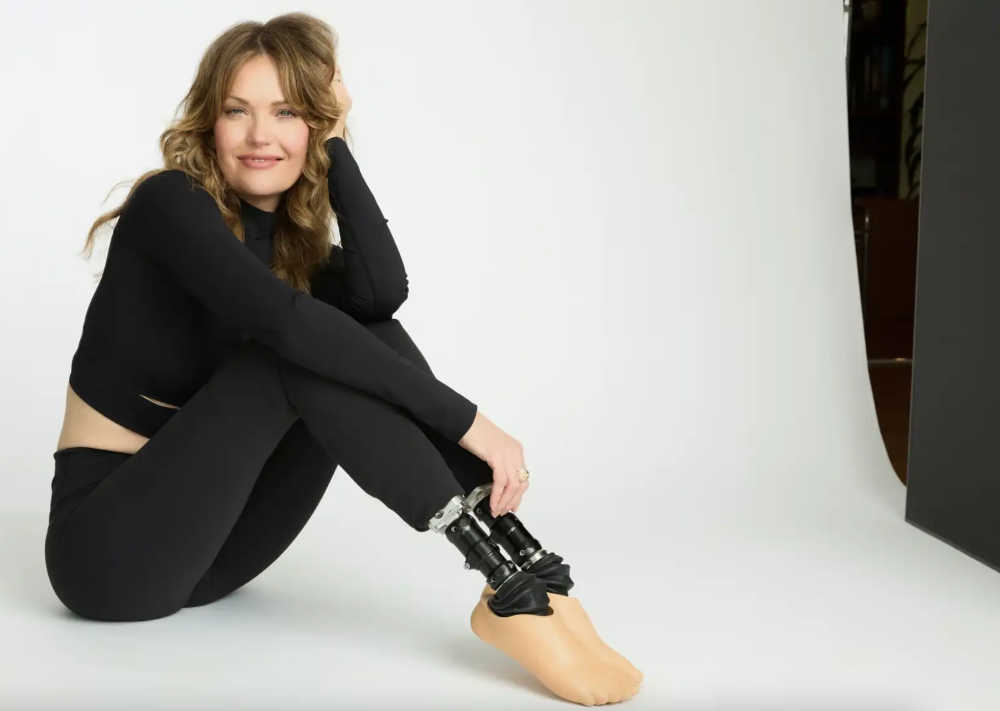
Photo courtesy Marketplace
Three-time Paralympic medalist Amy Purdy spoke to Marketplace
host Kimberly Adams March 12 about differences athletes at the Paralympics face when compared to their counterparts at the Olympics — including commentary and course conditions.
These are not side notes. They are the difference between participation and exclusion. Between potential and performance. But they are far less likely to make the headline than a neatly packaged backstory.
The same applies to language. Terms like confined to a wheelchair
rather than wheelchair user or suffers from
rather than just noting a disability still slip through, often without anyone really questioning them. They’re easy shorthand. But they carry weight. They reinforce the idea that disabled bodies are problems to be solved, rather than bodies that simply exist.
Images don’t help. Paralympic coverage often zooms in — literally — on prosthetic limbs, wheelchairs, and adaptive equipment. Stripped of context, turned into spectacle. The body becomes the story.
And if that body isn’t visually obvious? It’s far less likely to be shown at all.
One of the most glaring omissions in all of this is classification — the system that underpins Paralympic sport. It determines who competes against whom. It shapes strategy, training, fairness. It is fundamental.
However, it is rarely explained.
That’s because explanation takes time. It requires effort. It assumes the audience is willing to engage with the sport itself — not just the story around it.
So instead, emotion fills the gap, and that comes at a cost.
You have to give due space to the performance,
Howard urges. They’re super inspiring because they’re competing at the top level of their sport… not because they got up and they’re disabled.
It’s a simple distinction. But it’s one that much media coverage still struggles to make.
As long as emotion is prioritized over analysis, Paralympians are not being treated as equals to their Olympic counterparts. They’re being treated as something adjacent — something softer, more palatable, easier to consume.
This too has consequences.
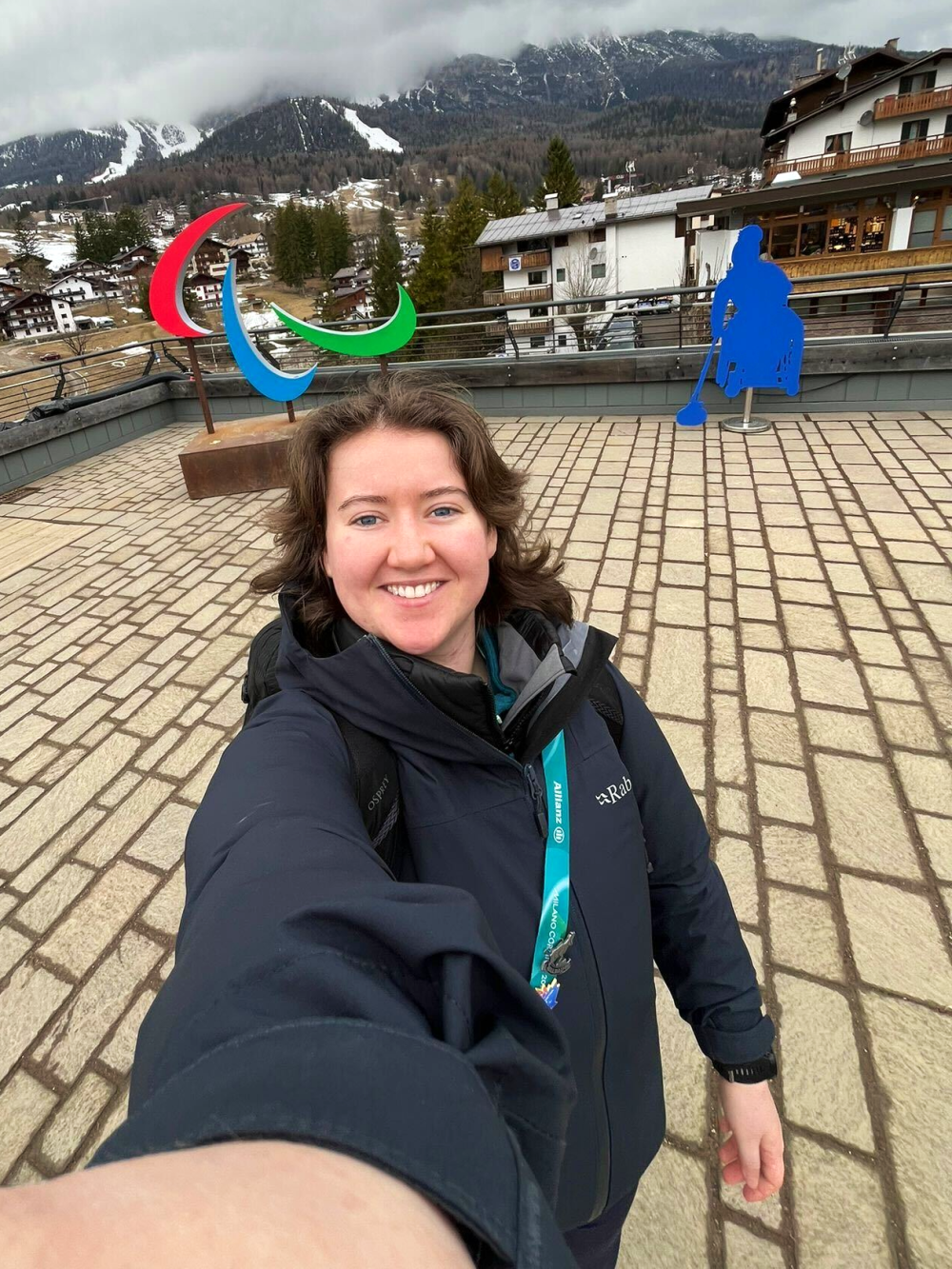
Sports reporter Laura Howard covered the 2026 Paralympics from Milano Cortina. She said she tried to push back on covering Paralympic athletes from a perspective that focuses on their disability and uses their background stories as purely inspirational, and instead, focus on their athletic performance and their competition.
It shapes who gets visibility — usually those with the most marketable
stories. It shapes what audiences understand — or fail to understand. It reinforces the idea that disability sits just outside the norm, rather than firmly within it.
The irony is that audiences aren’t the problem. When Paralympic sport is properly broadcast, properly scheduled, properly explained, people watch.
The gap isn’t interest. It’s an editorial choice.
None of this means stripping Paralympic coverage of humanity. Personal stories matter. Context matters. But they cannot be the entire story.
The shift that’s needed is actually quite simple. Treat Paralympians as athletes. Explain the sport. Talk about performance with the same seriousness you would anywhere else.
She urges journalists, Listen to their story as you would any athlete.Their disability shapes their experience, so it’s fine to talk about, but don’t make them a spokesperson for everyone. It’s their individual experience.
Stop assuming that disability needs to be softened, re-framed or made inspirational in order to be worth paying attention to. It doesn’t. Paralympians are already interesting, because they are competing at the highest level of their sport.
Good coverage means telling those stories,
explained Howard, but if someone wins a medal, you cover the performance first.
Laura Howard at the Paralympic Games
Read samples of Howard’s coverage of the 2026 Paralympics as it appeared in The Independent and on UK Sport:
Does this article leave you with lingering questions? Did this story change your way of thinking? We want to know.
Beth McCowen is a freelance journalist who specializes in women’s health and sport. Her work seeks to alter how individual journalists and the media as a whole approach and raise awareness of issues. Follow her on Bluesky at @bethmccowen.bsky.social.
This is news. This article uses interviews with people whose experiences, lives, or expertise are relevant to a topic along with facts and research to tell a story about an issue.
Bring back The Word
The Word is currently suspended due to funding — but you can change that.
Your donations matter. We report on accessibility in the journalism industry. In fact, The Word is the only magazine focused on accessibility in the journalism industry.
Whether you’re a reporter, editor, an accessibility professional, or a member of the public who happens to be interested in journalism or accessibility, we need your help to start publishing again. We don’t hide behind paywalls. We don’t ask you to subscribe. We just ask that you support us.
We’ll keep looking for grants and underwriting, but your donations do matter too.
Help The Word by using the donation box below.